Last Updated: November 5, 2026
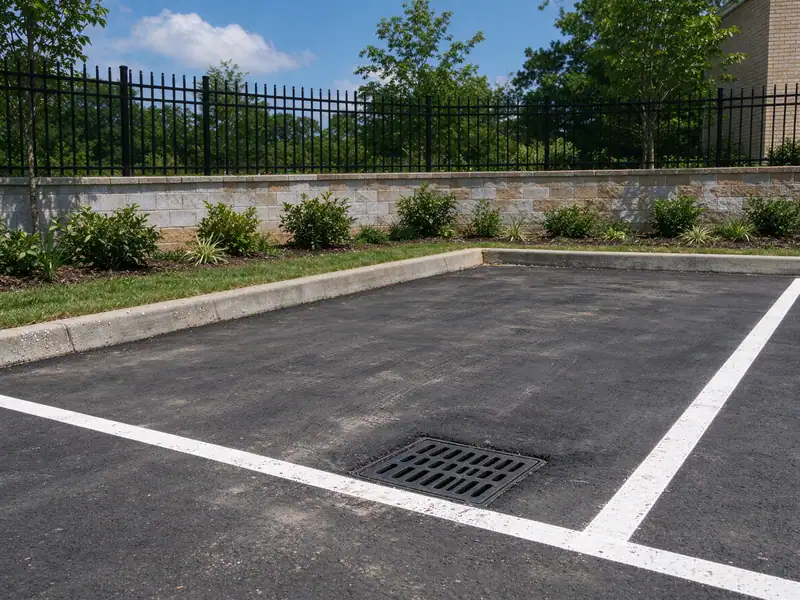
An inlet at the back of a parking bay can work well for parked cars and still leave the pedestrian route under water. Start with who uses each surface and when it must remain open. Those constraints affect collection, load rating, work sequencing and restoration.
Runwell Durham Drainage Company offers commercial drainage in the Durham area. The starting point is your intended result. If the immediate priority is to keep the entrance usable while restoring reliable collection, say so before comparing products or agreeing to excavation.
Identify the system the inlet belongs to
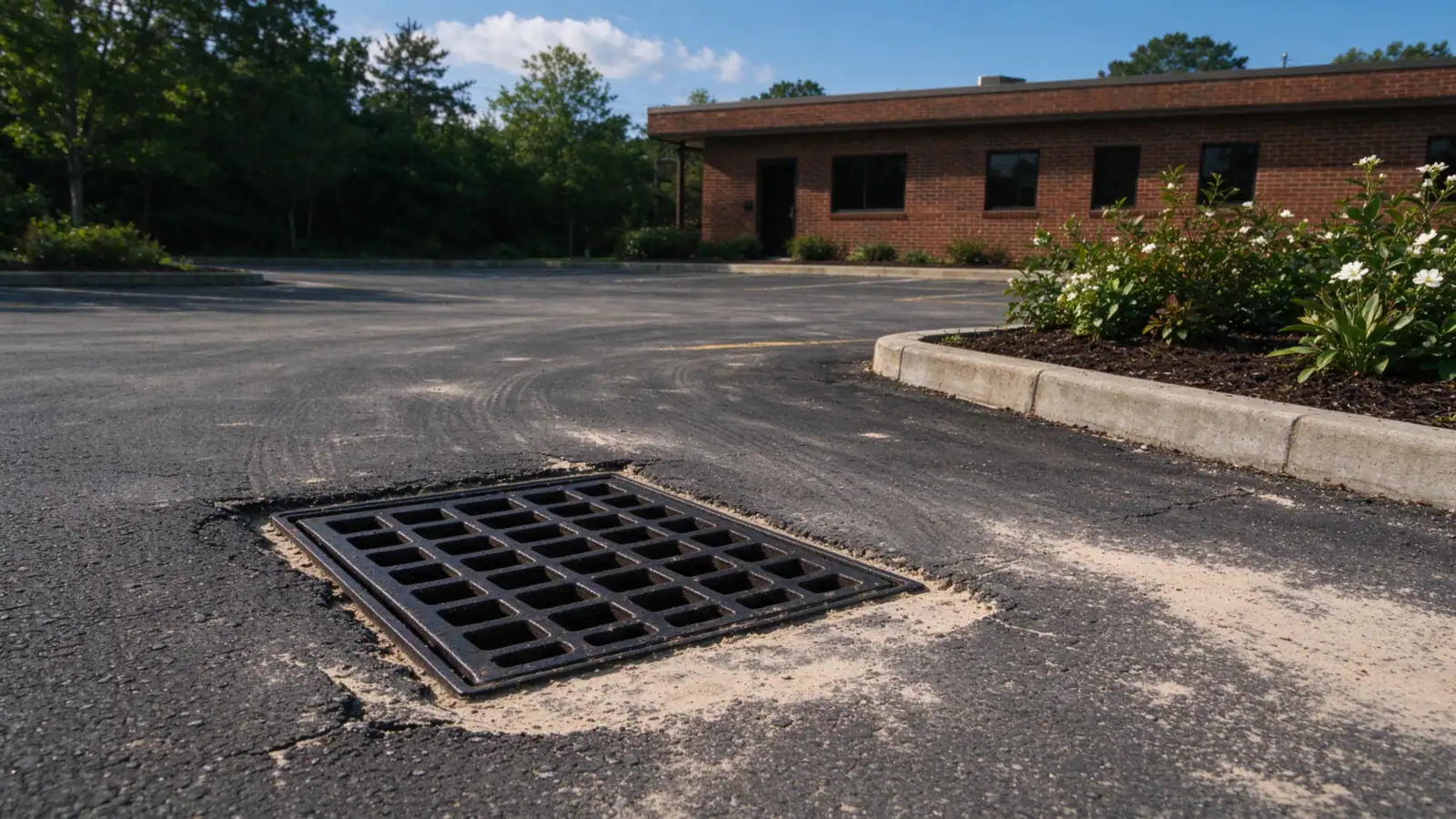
A parking lot grate may connect to a privately maintained line, a shared facility or a regulated stormwater system. Ownership of the pavement does not settle every maintenance obligation downstream. Ask the property manager for available drawings, recorded maintenance agreements and previous inspection findings. These records help distinguish a routine cleaning job from a proposed change that affects the approved drainage design.
Two scopes worth comparing
Consider a property with a low parking bay beside an accessible entrance. Compare these alternatives.
- Correct localized inlet or pavement defects within the existing system.
- Obtain design review for changes affecting a shared or engineered facility.
The deciding question is whether the failure is local maintenance or a change to the approved drainage arrangement. Ask the assessor to show where each option would begin, what it would change and where its effect would end.
| What to compare | Why it matters here |
|---|---|
| Site evidence | Establish recorded plans, maintenance agreements and the authorization to alter shared features before fixing the route. |
| Everyday use | Protect deliveries, vehicle loading and pedestrian access during the works during construction and at the finished level. |
| Performance | Explain how the proposed work will help keep the entrance usable while restoring reliable collection. |
| Future care | Identify the accessible point where you can first notice a loose inlet frame at a wheel path. |
Schedule around the surface use
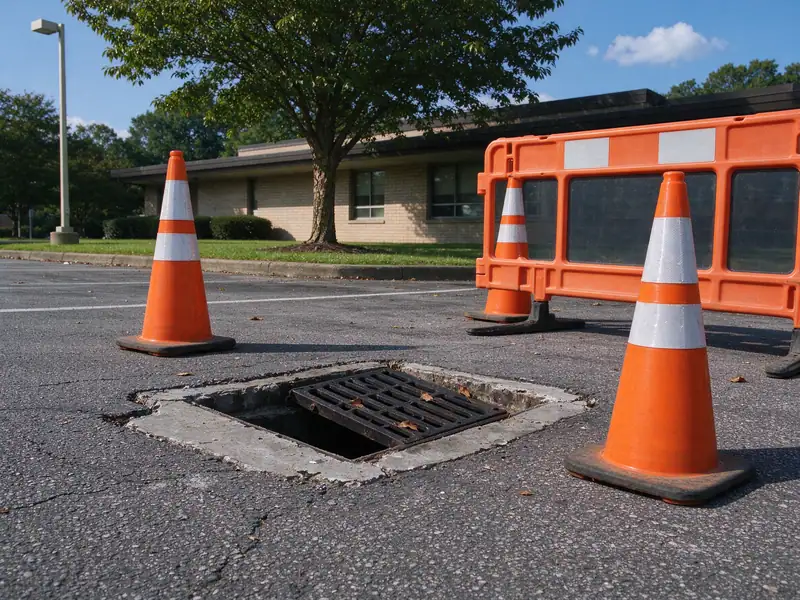
A vehicle crossing, an accessible pedestrian route and a loading apron can need different details even when they drain to the same inlet. Discuss which access must remain available, where materials can be stored and when repairs can be isolated. Reopening a bay can depend on the pavement restoration and surrounding support, not just completion of the pipe connection. Get the traffic and pedestrian arrangements in the scope before work is booked.
What to bring to the assessment
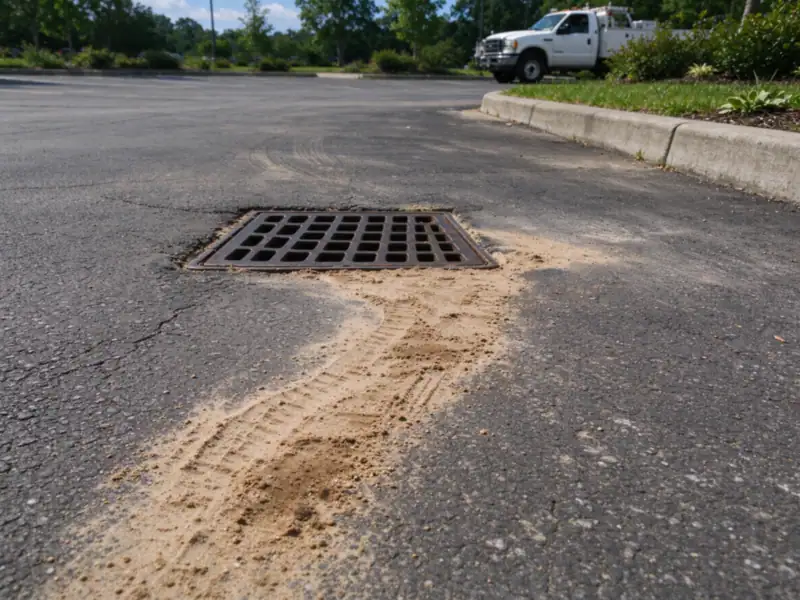
From a safe position, take a photograph showing the affected entrance, traffic path and downstream feature. Mark the first place water arrives, even if the deepest puddle forms somewhere else. If you have a plan of a buried run, include the date and any later changes. A sketch of what you actually know is more useful than an apparently precise line drawn through an unverified section.
Mention it specifically if several upstream inlets back up at the same time. That observation changes the question the contractor needs to answer. Ask which checks can be made from the surface and which would require opening a selected area or involving another specialist. Agree what happens if the first finding points away from the installation you initially had in mind.
Make later maintenance possible
Leave a usable route to clean sediment and inspect accessible components. A new planting island or a locked enclosure can defeat maintenance access long after the installation is complete. Keep updated route information with the property’s maintenance records.
Read the words attached to the line
Look for who holds the interest, what use is protected, how access is described and whether a separate maintenance agreement is referenced. Ask for clarification where the language or boundary is unclear. A survey can help identify the location but does not substitute for the terms. This distinction matters to a homeowner considering a fence, patio or drainage trench within a corridor that may be needed by someone else.
Keep approval and pricing in step
Where a route depends on an unapproved street connection, ask the estimate to identify that dependency. A conditional allowance is useful only if you understand what would change if the outlet were refused or moved. Separate the applicable government component from excavation, temporary access, materials and restoration. A route carrying additional decisions can still be sensible, but its price should not be compared as though those decisions were already settled.
Read the estimate against the finished property
Ask for a written boundary around a low parking bay beside an accessible entrance, including access rather than simply the length of the work. A price that assumes open access may change if deliveries, vehicle loading and pedestrian access during the works must remain usable. Separate excavation, material handling, connections and reinstatement where they affect your choice. If part of the route depends on recorded plans, maintenance agreements and the authorization to alter shared features, identify who will confirm it and when you can reconsider the scope.
Compare what you will see after a storm, not just what will be buried. A useful handoff identifies the collection point, the route and the receiving ground. Put the maintenance openings and any retained components on the same drawing. Keep it with photographs taken before backfill so a future fence, planting bed or patio does not compromise the work.
After the work
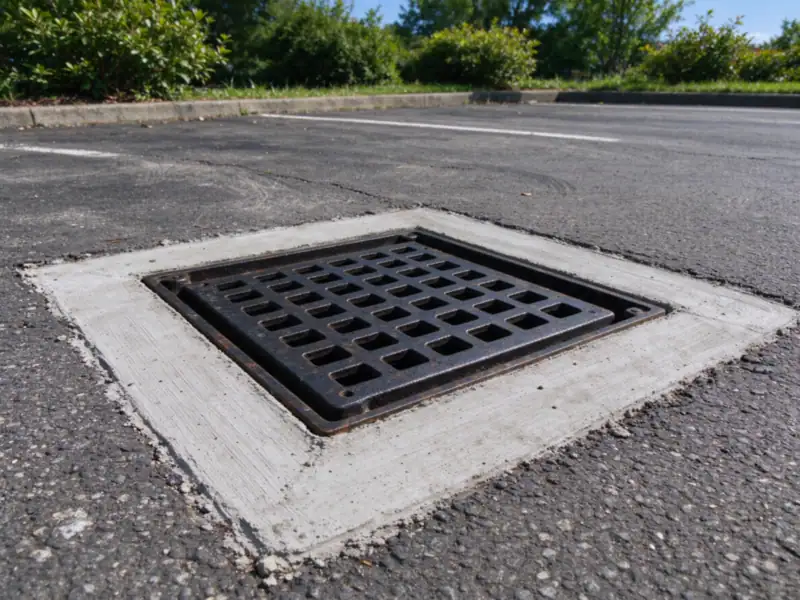
Give the property manager a record that can survive a change in maintenance contractor. Mark new or repaired structures, where cleaning equipment can enter, which routes must remain accessible and who controls any downstream facility. Note the authorized reopening conditions for repaired pavement rather than assuming that all vehicle use can resume when a grate is installed. Keep the original inspection finding alongside the agreed remedy. A future report referring to the same inlet can then distinguish a recurring defect from a separate issue elsewhere in the lot.
Questions about this decision
Can a property manager authorize a change to any parking-lot drain?
Authority depends on ownership, recorded agreements and the feature involved. Confirm who may approve work and whether the approved stormwater design would change.
How should a quote address business access?
Ask which bays or paths close, how temporary access will work and who reinstates pavement and markings. Those items can matter more than the measured length of pipe.
What should the assessor check at a low parking bay beside an accessible entrance?
The immediate question is whether the failure is local maintenance or a change to the approved drainage arrangement. Follow the evidence from the upstream source to the proposed receiving area. If part of that route is concealed, ask how uncertainty affects the recommendation and whether a limited investigation could settle it.
How does the plan account for deliveries, vehicle loading and pedestrian access during the works?
Show that constraint during the site discussion. Compare access while work is underway with the finished condition. A proposal can restore drainage and still leave an awkward crossing if it only specifies the buried components.
What should I report if several upstream inlets back up at the same time?
Note when it occurred relative to rain or a change on the property. Record the affected entrance, traffic path and downstream feature. A repeated pattern is useful evidence for checking the collection method and outlet before committing to more work.
Discuss your route
Tell Runwell about a low parking bay beside an accessible entrance, the result you want and any uncertainty about the outlet. Discuss your property or compare the items in a drainage estimate. For the two decisions most closely connected to this work, see How Does a Drainage Easement Affect Yard Work? and When Does Drainage Work in Durham Need Review?