Last Updated: November 5, 2026
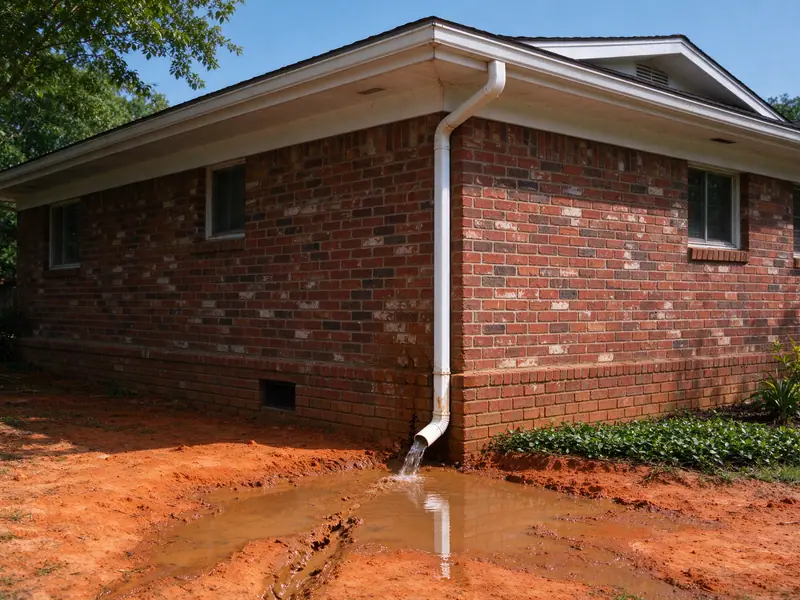
One roof corner can collect more rain than the small bed below it can absorb. Follow the downspout all the way to where its water stops moving. Extending it across a path can protect the wall while leaving a new puddle exactly where you step.
Runwell Durham Drainage Company offers downspout drainage in the Durham area. The starting point is your intended result. If the immediate priority is to move concentrated roof water beyond the wet bed, say so before comparing products or agreeing to excavation.
Start with the part of the roof feeding the elbow
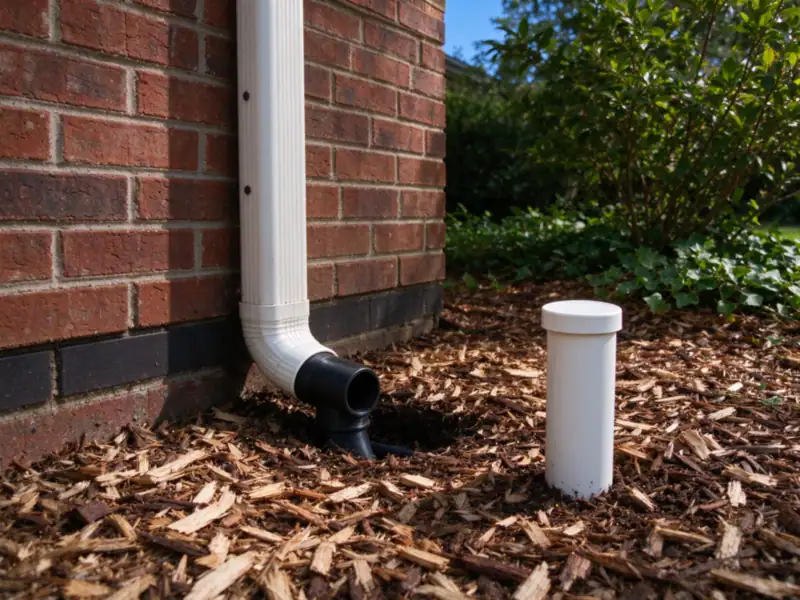
Two downspouts on the same wall need not collect equal amounts of rain. Valleys and roof additions can send a large share toward one corner. On the ground, follow the actual elbow that feeds the wet bed. Water pouring over a gutter edge before reaching the downspout calls for a different inspection than water leaving a clear elbow and flowing back toward the foundation. A ground extension only manages what reaches its inlet.
Two scopes worth comparing
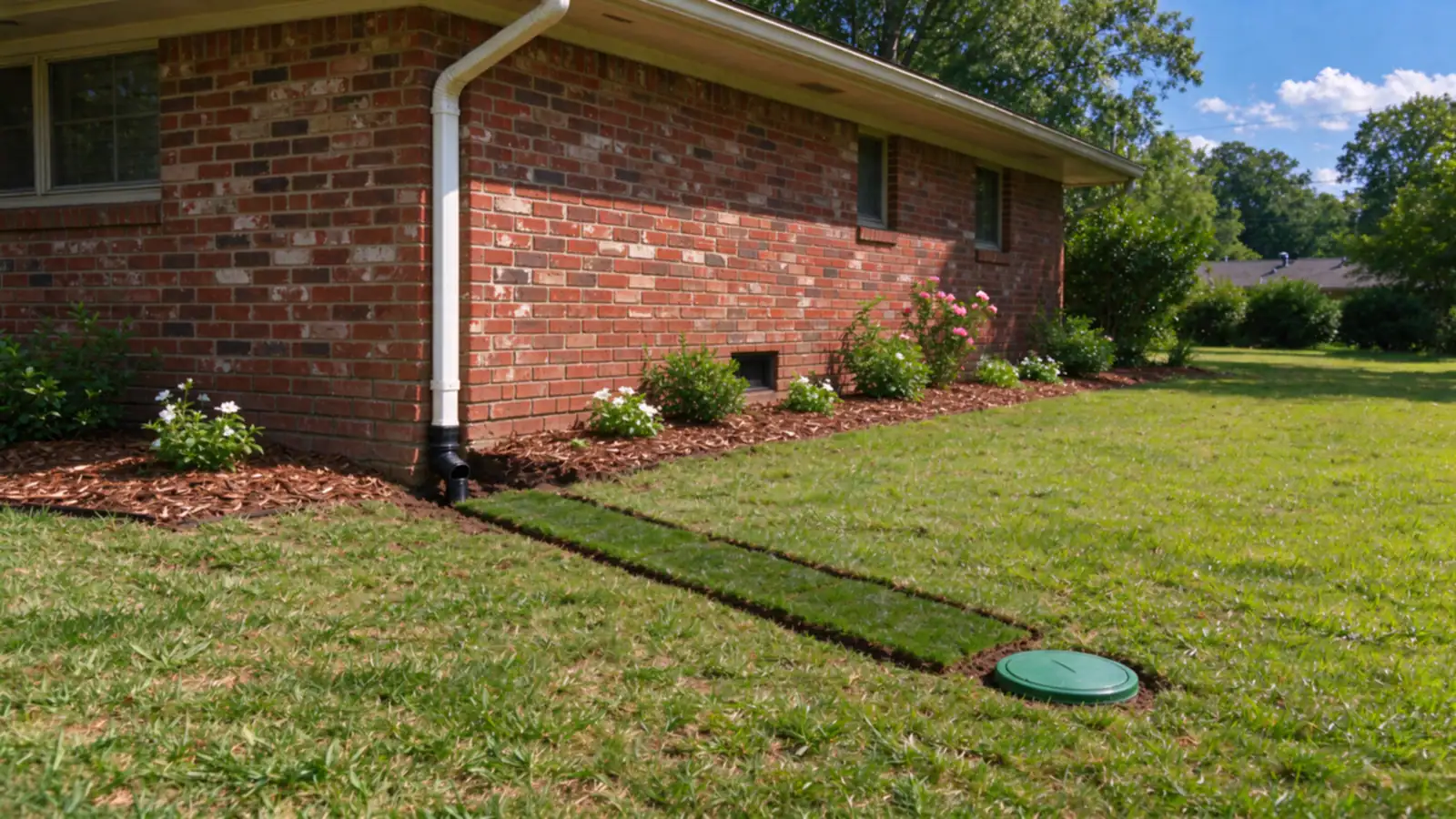
Consider a property with an elbow discharging into use a bed beside the house. Compare these alternatives.
- A visible extension to stable ground.
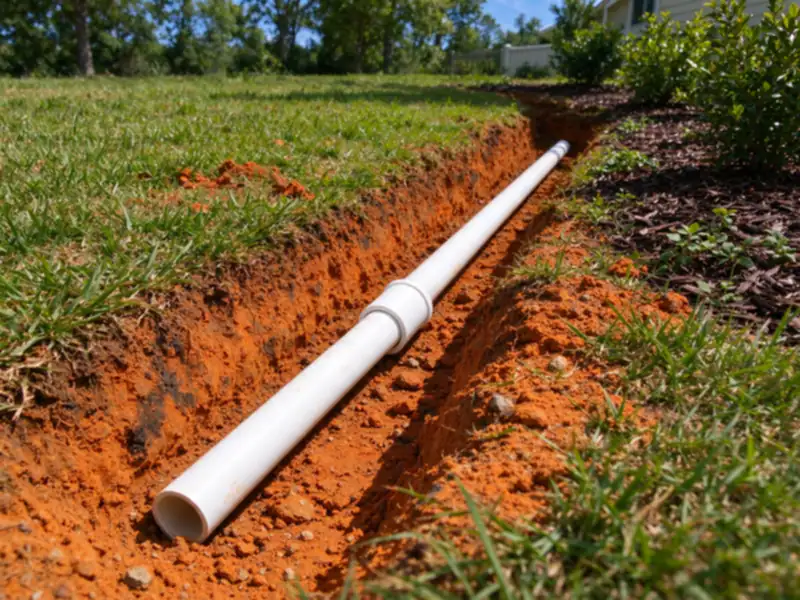
- A buried solid line with accessible fittings.
The deciding question is whether a surface extension can avoid paths and still reach a receiving area. Ask the assessor to show where each option would begin, what it would change and where its effect would end.
| What to compare | Why it matters here |
|---|---|
| Site evidence | Establish the level of the proposed termination during rain before fixing the route. |
| Everyday use | Protect a walkway that must stay clear between the driveway and door during construction and at the finished level. |
| Performance | Explain how the proposed work will help move concentrated roof water beyond the wet bed. |
| Future care | Identify the accessible point where you can first notice a buried transition that catches leaves. |
Allow for the last few feet
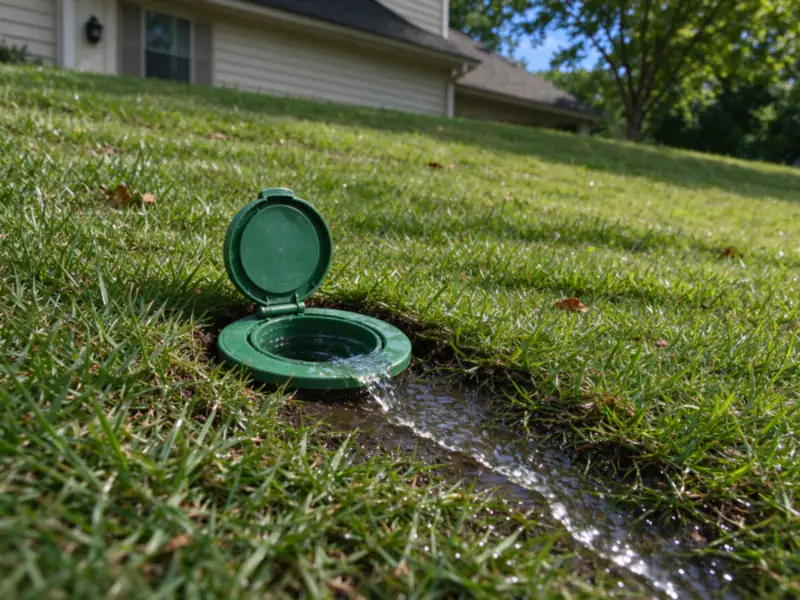
A solid underground run can take roof water neatly under a path. At the far end the concentrated discharge still needs to spread. If the pipe exits onto bare soil, the first storm may move sediment onto the walk or cut a groove around the outlet. Look farther downhill than the visible pipe end and ask how the finish will cope before turf establishes. Where the proposed route meets shared drainage, permission and actual receiving levels are part of the choice.
What to bring to the assessment
From a safe position, take a photograph showing the roof corner and the entire proposed discharge area. Mark the first place water arrives, even if the deepest puddle forms somewhere else. If you have a plan of a buried run, include the date and any later changes. A sketch of what you actually know is more useful than an apparently precise line drawn through an unverified section.
Mention it specifically if water returns toward the building after leaving the pipe. That observation changes the question the contractor needs to answer. Ask which checks can be made from the surface and which would require opening a selected area or involving another specialist. Agree what happens if the first finding points away from the installation you initially had in mind.
Keep the transition accessible
Leaves and small debris can enter from above. Ask where the connection can be checked without taking apart landscaping. If several roof lines join, keep enough information about the junctions to tell which corner is contributing to a backup.
Mark the transition on the estimate
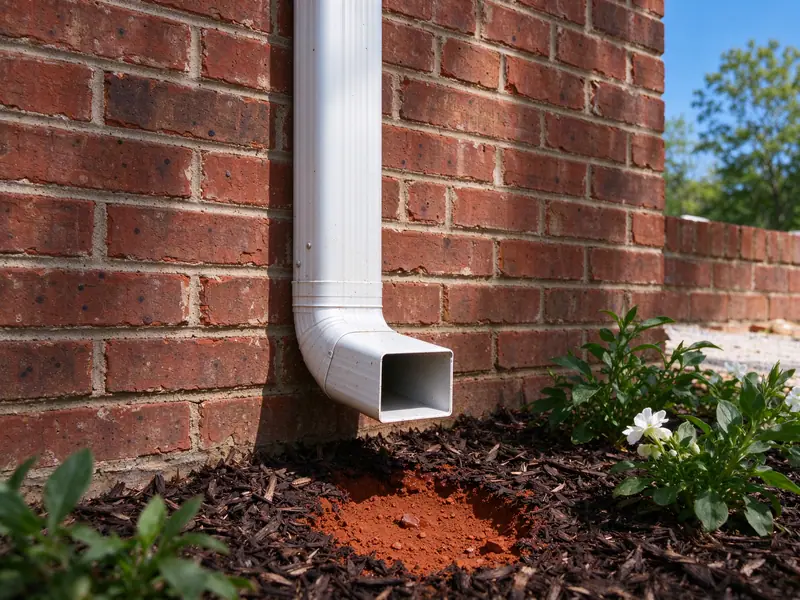
An estimate that says only “install drainage pipe” leaves a consequential decision unclear. A subsurface collector needs permeable material and an appropriate filter arrangement so water can reach the pipe. A conveyance section should contain gathered flow until it reaches the receiving area. Ask where collection starts, where it stops and how the two sections connect. That makes the purpose of each material visible before it disappears beneath the lawn.
Define a result that can be observed
An exterior scope might aim to prevent roof discharge from collecting in a particular bed or to route surface flow around a path. That is a result you can look for after rain. Drying a finished interior room or correcting structural movement is a different scope with different evidence. When indoor conditions are part of the concern, discuss coordination before treating a drainage price as the total cost of addressing the building.
Read the estimate against the finished property
Ask for a written boundary around an elbow discharging into a bed beside the house, including access rather than simply the length of the work. A price that assumes open access may change if a walkway that must stay clear between the driveway and door must remain usable. Separate excavation, material handling, connections and reinstatement where they affect your choice. If part of the route depends on the level of the proposed termination during rain, identify who will confirm it and when you can reconsider the scope.
Compare what you will see after a storm, not just what will be buried. A useful handoff identifies the collection point, the route and the receiving ground. Put the maintenance openings and any retained components on the same drawing. Keep it with photographs taken before backfill so a future fence, planting bed or patio does not compromise the work.
After the work
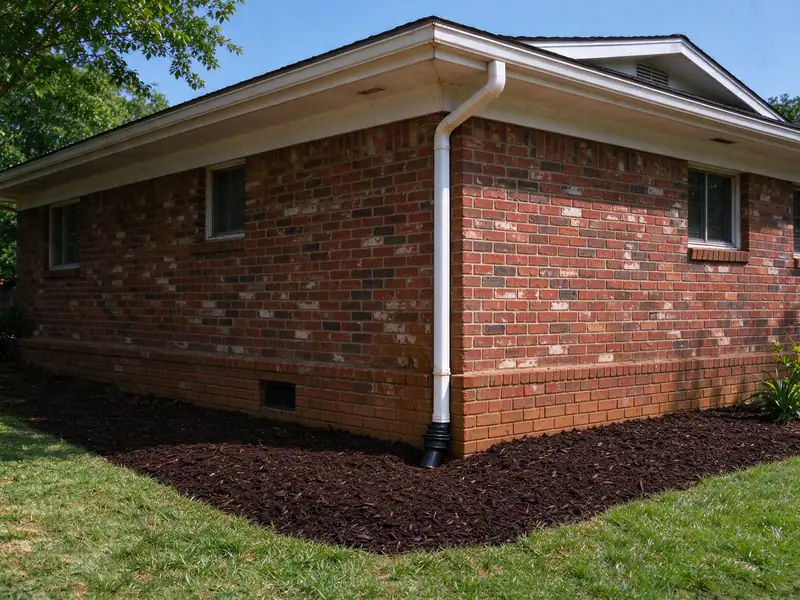
Keep a separate route note for each roof corner that was changed. If one elbow backs up while another discharges normally, that distinction can narrow the problem to a branch or connection. If all branches stop discharging when the receiving area fills, start the discussion at the common downstream route. Check visible openings after leaf fall and after landscaping near the termination. Avoid burying the end in fresh mulch just because it looks less conspicuous. A discreet installation still needs an outlet that can open and be found again.
Questions about this decision
Can several downspouts share a pipe?
They can only share a route that can receive their combined flow. Identify the roof section feeding each elbow and evaluate the downstream route before joining them.
Should the roof pipe have holes?
A roof extension normally needs to carry already-collected water. Perforations along a wet bed can release that water back into the ground you meant to protect.
What should the assessor check at an elbow discharging into a bed beside the house?
The immediate question is whether a surface extension can avoid paths and still reach a receiving area. Follow the evidence from the upstream source to the proposed receiving area. If part of that route is concealed, ask how uncertainty affects the recommendation and whether a limited investigation could settle it.
How does the plan account for a walkway that must stay clear between the driveway and door?
Show that constraint during the site discussion. Compare access while work is underway with the finished condition. A proposal can restore drainage and still leave an awkward crossing if it only specifies the buried components.
What should I report if water returns toward the building after leaving the pipe?
Note when it occurred relative to rain or a change on the property. Record the roof corner and the entire proposed discharge area. A repeated pattern is useful evidence for checking the collection method and outlet before committing to more work.
Discuss your route
Tell Runwell about an elbow discharging into a bed beside the house, the result you want and any uncertainty about the outlet. Discuss your property or compare the items in a drainage estimate. For the two decisions most closely connected to this work, see Where Should Solid or Perforated Drain Pipe Be Used? and How Can I Keep Runoff Away From My Foundation?