Last Updated: November 5, 2026
Before comparing bids for a project you hope will receive conservation assistance, speak with Durham Soil and Water. The order matters. An improvement chosen and booked before program assessment may not meet the required process.
Runwell Durham Drainage Company can help assess the exterior drainage work. To narrow the enquiry, first distinguish a private drainage repair paid for directly from a documented conservation concern that staff can assess. The distinction affects the work worth pricing and what you should look for on the finished property.
Prepare for the conservation assessment
Gather the parcel address, the affected area, the history of the developed site and photographs that show the water source as well as the result. Explain whether the concern is erosion, concentrated runoff or another resource issue. Durham Soil and Water staff assess eligibility and suitable practices. Asking for that assessment before installation gives the program a chance to evaluate the original condition and avoids assuming a preferred product will qualify.
What would change the recommendation?
Take two possible observations. In the first, you find a homeowner assuming that any wet lawn qualifies for a payment. In the second, you find a proposed practice changed after the program has assessed a different design. The visible wet area may look similar, but the two findings place the question at different points in the route. Record what you see directly and leave the underground part of the sketch open if you cannot identify it.
| Decision | First approach | Alternative to investigate |
|---|---|---|
| What are we addressing? | A private drainage repair paid for directly | A documented conservation concern that staff can assess |
| What could the scope involve? | Request the program assessment before committing to construction | Compare a private scope on its own terms if assistance is unavailable |
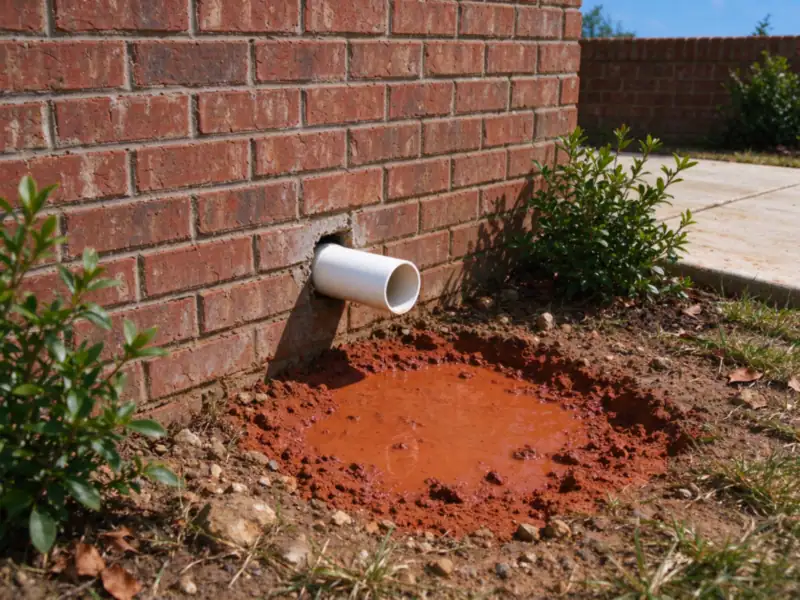
| What would help settle it? | Photograph the initial entry point and the surface immediately beyond it. | Identify remaining unknowns at the receiving end before committing to construction. |
Keep two decisions separate
First, decide which private work would improve the property and what its complete scope costs. Second, establish whether the program will support a particular practice and under what conditions. An eligible project can still depend on funding and approval. Ask the program about sequencing, owner responsibilities and maintenance. Do not treat a conversation about possible assistance as authorization to begin reimbursable work.
Follow the decision onto a real layout
For example, consider a proposed planted basin below a lawn or roof-water route. The owner wants to manage a suitable volume of runoff while retaining a planted landscape. Establishing the inflow area, groundwater, setbacks and overflow destination can change whether a proposal is practical even after the likely cause has been narrowed down. On the drawing, include space for weeding, sediment removal and plant establishment as well as the area that gets wet. That feature can determine where equipment goes and what must be protected.
A proposal addressing only the most visible symptom deserves a closer question. What happens farther along the route, and where can someone inspect the result later? If water remains against a building after the bed fills, the observation should be weighed against the original assumption. Compare the timing with the condition in the photograph. A route that works when the receiving ground is dry may perform differently when the same storm has wetted the entire property.
Size the question before choosing plants
Begin with the area feeding the proposed basin and the way water enters it. Concentrated roof runoff can scour a bed that would tolerate a gentler sheet of water. Storage, infiltration and overflow need assessment together. A plant that tolerates wet roots cannot correct a basin against a building, an unsuitable soil layer or a route that sends overflow onto neighboring land.
Compare the finished use
A basin occupies surface space that might otherwise be used for a path, lawn or seating. That can be a benefit if the owner wants a planted landscape feature and can maintain it. If the primary goal is an open play area, compare the tradeoffs with a suitable conveyance or alternative storage arrangement before deciding.
Questions to put to the program and to the contractor
For the program, ask which resource concern is being assessed, which practice could address it and what must be approved before work begins. Ask whether the site history and location fit the current requirements and what obligations continue after installation. For the contractor, ask what the complete physical scope includes, how disturbed ground will be restored and what could change the price.
The two conversations can inform one another without producing the same answer. A practice can be technically useful on a property even if no assistance is available. An otherwise eligible practice can still require a suitable location, maintenance commitment or different construction detail. Keep copies of the actual application and approval documents separate from the estimate. That helps you compare your own cost and responsibilities with what is confirmed, rather than planning around a possible payment or a particular contractor’s assumed participation.
Compare the work you would authorize
For the first proposal, write down how it deals with a private drainage repair paid for directly. For the other, ask what finding supports treating a documented conservation concern that staff can assess as the deciding issue. One proposal may include restoration and a maintained outlet; another may stop at a buried connection whose destination is unknown. Those are materially different purchases even when the visible starting point is identical.
Before selecting a contractor scope, ask for the observations behind the recommendation and the conditions that could change it. Describe the access route, the surface that must be reinstated and any later landscape work. If another party controls the receiving feature, establish who can approve a change before committing to the part on your land. This keeps a useful private improvement distinct from a connection that may need a different route.
Questions about this decision
What property history should I bring to a CCAP enquiry?
Durham County identifies a developed-site age requirement of at least three years. Bring the address, approximate development history and evidence of the resource concern for staff to assess.
Can I subtract an expected award from my estimate?
Keep the contractor total and any confirmed assistance separate. Approval, eligible practice and available funding determine what support may apply. A quote does not guarantee an award.
What observation would help distinguish a private drainage repair paid for directly from a documented conservation concern that staff can assess?
Bring a wide view of the incoming water and one of the receiving area. Note the date relative to rainfall, irrigation or recent work. In particular, mention a homeowner assuming that any wet lawn qualifies for a payment if it matches your property. That detail gives the conversation a specific route to examine.
Your next step
If a proposed practice changed after the program has assessed a different design describes your situation, start with that detail. Include what you want back from the affected part of the property, such as a usable walkway or ground that can be maintained. Read Rain Garden Drainage in Durham, NC for the related work, or contact Runwell to discuss which checks belong in your estimate.