Last Updated: November 5, 2026
Choose drainage work by following the water from its source, through the affected area, to a suitable destination. Surface runoff, roof water and subsurface saturation need different handling. The right solution may be a small repair, a change to the ground or a new collection system, depending on what that route reveals.
Runwell Durham Drainage Company offers exterior drainage improvements for Durham properties. This guide helps you decide what deserves assessment, what you can observe safely and what to discuss before agreeing to excavation. It does not diagnose your property from a photograph or assume every wet lawn needs a French drain.
What do you want the work to change?
Start with the part of the property you cannot use as intended. Perhaps a side path stays muddy, rain reaches the garage approach, or a planted bed remains saturated. A clear objective makes it easier to assess whether a proposed drain addresses the problem or simply adds pipe nearby.
Describe the extent of the wet area and when it appears. A brief puddle during heavy rain is a different observation from persistent soft ground several dry days later. Note whether the problem began after a patio, fence, landscaping or roof alteration. Changes can interrupt an old route or increase water arriving at it.
You do not need to excavate to prepare. Observe from a safe place, photograph the wider ground and mark known inlets and outlets on a simple sketch. Do not enter moving water, lift heavy covers or investigate suspected electrical or contaminated-water hazards yourself.
Which water are you trying to manage?
Runoff moving across the surface
Surface water follows the ground. It may spread broadly before collecting in a depression, or concentrate at the edge of a driveway. A surface inlet, channel or open route can receive that flow. A buried collection trench may not admit a sudden rush quickly enough to protect the paved area above it.
Look for where the water first enters the affected area. That observation helps distinguish a low-point problem from an upstream route problem. Raising one patch without following the next part of the route can simply shift the ponding.
Water held within the ground
Subsurface water can keep a lawn soft after visible runoff has gone. A French drain or curtain drain may intercept it where site conditions support that arrangement. The collection depth and position matter because a trench must meet the relevant water path to do useful work.
Clay-rich ground can transmit water slowly, but a soil description alone does not establish the source or the solution. Fill, compacted layers and changes across a lot can alter how water moves. Distinguish a system that carries water away from one that depends on infiltration into that ground.
Roof water and persistent dry-weather wetness
A downspout gathers water from a roof and concentrates it at one discharge point. A solid extension can convey that collected flow, provided its destination is suitable. Putting it into perforated pipe beside the house may release water where you are trying to keep the ground drier.
If wetness continues without rain, widen the investigation. Irrigation, a leaking supply line or another source may be involved. Drainage work can move some of that water while leaving the cause untouched. Mention the dry-weather pattern before discussing a new runoff system.
Where can the water actually go?
The outlet should be considered before choosing a trench alignment. It needs suitable levels and a receiving area that can handle discharge without repeated ponding, erosion or a new problem elsewhere. A nearby street, property boundary or ditch is not automatic permission to connect.
A gravity system depends on the relationship between collection and discharge levels. Extra pipe does not create useful fall. If gravity cannot provide the needed route, the alternatives may include a changed layout, a suitable infiltration measure or separately assessed pumping. Each changes the equipment, maintenance or site requirements.
An emitter is only an end component. Ask where water travels after it opens, whether vegetation can bury it, and what happens when the receiving area is already wet. Keep a realistic overflow route in the discussion. No ordinary yard improvement should be described as making a property immune to every storm.
Which system fits that route?
| Choice | What it does well | Decision to settle |
|---|---|---|
| Catch basin | Collects surface flow at a point and provides accessible sediment space | Will water reach the grate, and can the outlet carry it? |
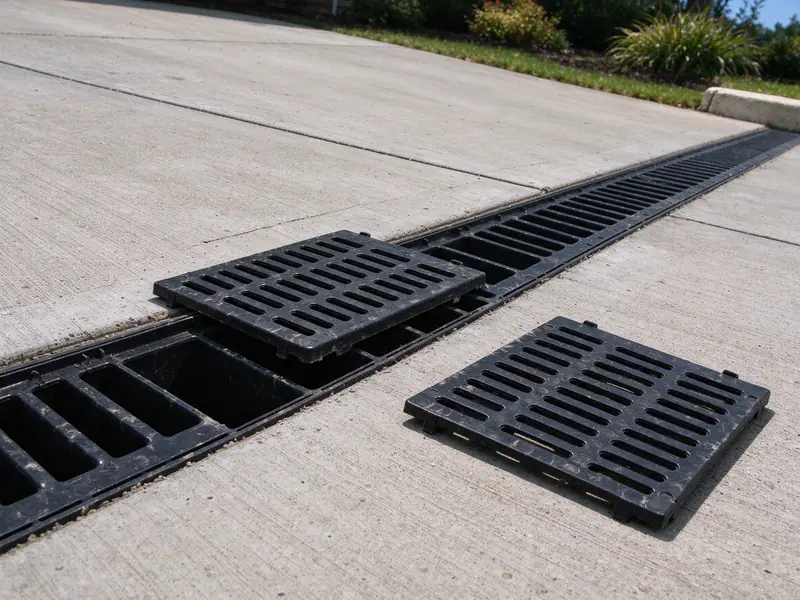
| Channel or trench drain | Collects across a linear paved edge | Does the surface fall toward it, and is the load rating suitable? |
| French or curtain drain | Intercepts water within the ground | Does the trench meet the water path at a workable level? |
| Swale | Carries runoff along a shallow open route | Is there space for the shape, finish and receiving area? |
| Solid conveyance pipe | Carries already collected water | Are fall, fittings, access and discharge suitable? |
| Dry well or rain garden | Stores and infiltrates water where conditions allow | Can the soil accept it, with suitable setbacks and overflow? |
French drain or catch basin?
Choose by how the water arrives. A basin receives surface runoff at its inlet; a French drain collects from surrounding ground. A property can need both, but the combined arrangement needs an explanation of flow and capacity. More components are not automatically a better design.
Channel drain or trench drain?
These terms commonly describe linear surface collection. The useful comparison is the actual product and installation: grate loading, channel depth, outlet, support and the surrounding pavement levels. A long grate installed above the approaching water can still leave a puddle.
Swale or underground route?
An open swale can make the water path visible and accessible. It takes space and its shape must fit how you use the yard. Underground conveyance can preserve surface use but brings buried connections and maintenance-access needs. Compare both against the receiving area and restoration, not appearance alone.
Can you keep the existing drainage?
An existing system deserves a condition check before replacement is assumed. Leaves at a grate, sediment in a basin, a buried outlet or a damaged connection can reduce performance. Cleaning or a focused repair may restore a sound route while avoiding unnecessary excavation.
Other findings change that decision. A line with inadequate levels, repeated collapse, widespread soil entry or an ineffective outlet may need redesign. Cleaning cannot create fall, and replacing one fitting cannot make an unsuitable receiving area work. Ask which finding separates the narrower option from replacement.
Compare the new water load too. A system that once served a small roof area may now receive runoff from additional paving. Restoring the original pipe condition does not necessarily address the changed flow. That is a scope question rather than proof that the old workmanship was poor.
Make the next conversation specific
Describe the original performance, what changed and the result you want now. If you know the outlet location or have older installation photos, mention them when you request an estimate. The purpose is to identify useful next checks, not to select a full replacement before the route is understood.
How do local conditions change the plan?
NC Geological Survey’s Triassic-basin guidance identifies clay-rich soils with low water transmission in parts of the Durham region. This makes site-specific infiltration assessment important when considering a dry well or rain garden. It does not establish that every Durham lot has the same soil or that a French drain is always required.
The City of Durham’s drainage guidance separates private responsibility from public-system responsibilities. Work affecting city right-of-way needs the relevant review. For properties outside city limits, the Durham County page explains why road and shared-feature ownership should be established before private changes are proposed.
Recorded easements, regulated buffers and applicable stormwater plans can limit where work belongs. For a commercial property or HOA facility, ask for approved drawings and maintenance records. A routine yard-drain proposal is not a substitute for required engineering or regulated stormwater compliance.
What is outside an exterior drainage scope?
Storm drainage manages rain and surface runoff. Sanitary sewer drainage carries wastewater and involves different systems and specialists. Do not connect outdoor runoff into a sanitary line as a shortcut. If the water may be wastewater, identify the cause before treating it as an ordinary yard-drain problem.
Exterior water management also differs from structural foundation repair and interior waterproofing. Moving downspout discharge or correcting surface flow may address an important source, but it does not establish the condition of a wall or seal an interior entry path. Separate scopes make those limits clear.
Exterior sump discharge routing needs coordination with the pump system. A new outside pipe does not prove that the pump, its controls or electrical supply are suitable. Where pumping is necessary, confirm those responsibilities and the ongoing maintenance and power needs rather than treating it as gravity drainage with an extra fitting.
What should the written estimate include?
Ask for the problem being addressed, the collection method, the route and the intended discharge area. Materials and access points should be identified. The estimate should also explain any unresolved condition that could change the work, such as an unknown buried connection or a permission not yet established.
Restoration belongs in the same conversation. Excavation can affect more than the narrow trench because equipment and soil need space. Agree how turf, planting, excess soil and paved crossings are handled. If later landscaping is planned, coordinate the drainage first so it is not disturbed twice.
The cost guide shows how to compare these items without inventing a total from pipe length. Assistance programs require separate eligibility decisions, and insurance coverage comes from the policy and insurer. Neither should be assumed inside an ordinary estimate.
How do you live with the finished system?
Keep a route record and know which components are accessible. Clear surface debris before it blocks a grate; do not bury an outlet or cover a maintenance point with a new bed. Follow the maintenance guidance for the installed components and arrange appropriate help for inaccessible or heavy parts.
After rain, observe whether collection points are receiving water and whether the discharge creates erosion or recurring ponding. Compare the same area with your earlier photos. A new symptom deserves investigation, especially after landscaping or construction changes the surrounding flow.
No system remains independent of the property around it. Vegetation grows, sediment moves and surfaces change. Preserving access and recognizing changes helps protect the work without turning ordinary maintenance into a reason for unnecessary replacement.
Questions before choosing a solution
Is the lowest point always the right place to put a drain?
It may be a collection point, but the full route still matters. Water must reach it and then discharge somewhere suitable. Sometimes intercepting water earlier or correcting a surface route better addresses the area you want to use.
Can drainage work guarantee that my property never floods?
No ordinary yard-drain scope supports that promise. The proposal should state the problem it addresses and the conditions on which it depends. Extreme events, receiving-area limitations and off-site flows may exceed that scope.
How can I choose when two contractors recommend different methods?
Ask each to explain the water source, collection mechanism and outlet, then compare the findings behind the recommendation. Identify what each method leaves unresolved and what further measurement could settle the difference. That is more useful than choosing by product name alone.
A plan you can understand before the ground opens
You should be able to explain what water the work collects, where it goes and what finish remains. Runwell manages exterior drainage work through licensed and insured contractors, with the scope matched to the property and any required qualifications. Discuss your property with the desired result, the wet-weather pattern and any known access or outlet constraints.