
Last Updated: November 5, 2026
Water may collect entirely on your property while the cause sits farther uphill or beside the road. Before paying to change a ditch or bury a pipe, establish which part of the drainage system you can change and where the water can go.
Runwell Durham Drainage Company offers exterior drainage work for Durham County properties, including yard drainage, roof-water routing, grading and suitable subsurface systems. Share the property address and the affected area to discuss service availability and the scope. A Durham mailing address alone does not establish city jurisdiction.
Start with the boundary of the problem
A wet yard inside your lot
A shallow depression, concentrated downspout discharge or an interrupted surface route may support a private improvement. Follow the water from its source to the wet area, then look beyond it. The fact that water reaches a low spot does not mean that spot is a suitable discharge destination.
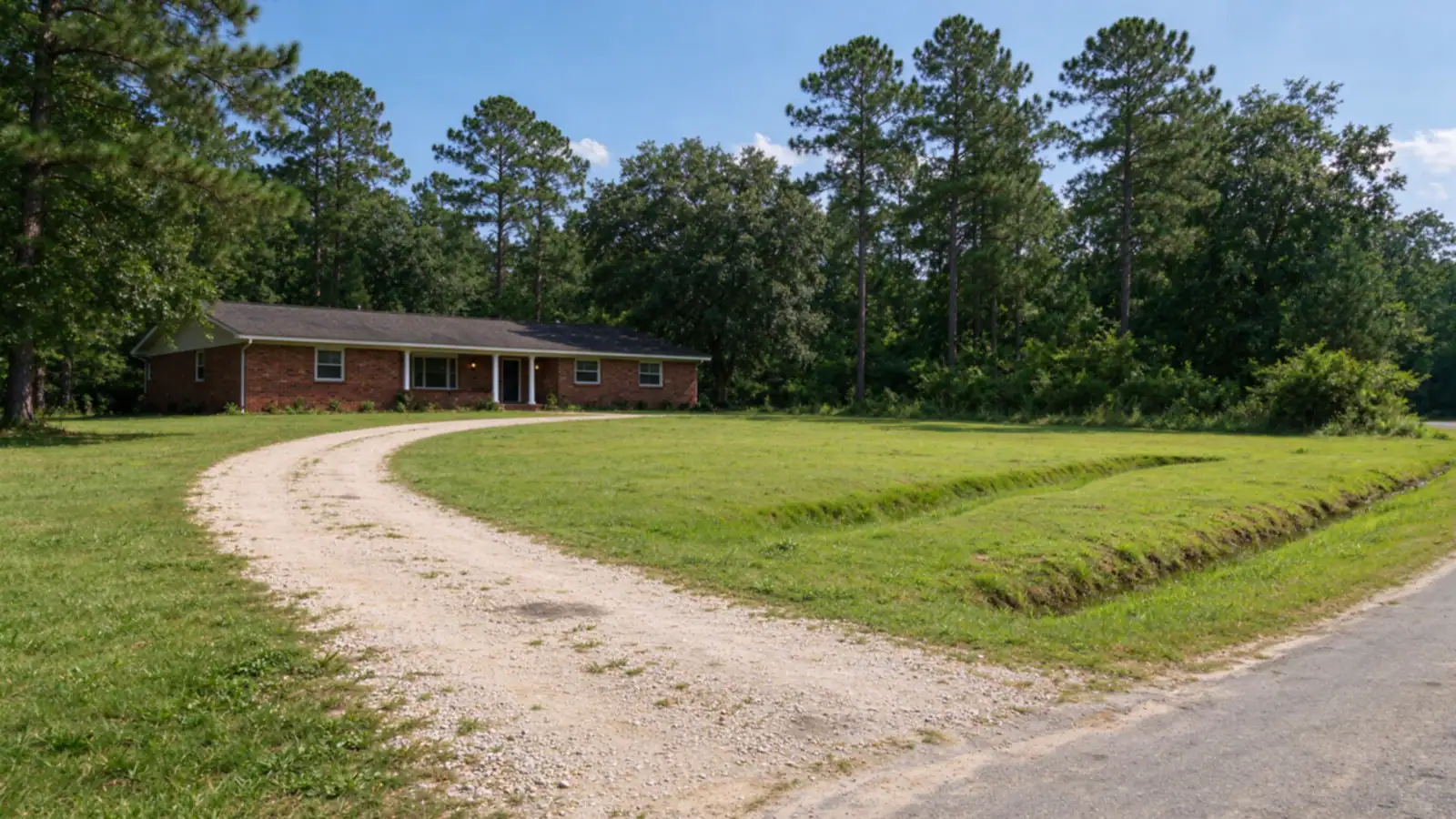
A roadside ditch or driveway culvert
A restriction near the road can affect a yard, but that does not automatically make it a private excavation job. Durham County’s private-lot drainage guidance explains that the county does not maintain stormwater ditches and culverts. Its staff can help identify the relevant road, HOA or private responsibility.
A shared drainage feature
A basin, easement or channel serving multiple properties needs its records checked. An HOA document may assign maintenance, and a recorded easement may protect access or limit changes. Agree who can authorize the work before changing a shared route.
Bahama and Rougemont: use the parcel, not the postal name
For a Bahama property, include the actual address and whether the concern involves the yard, driveway or road edge. The postal place name helps locate the enquiry, but it does not settle the responsible authority. A route across private land and a route that alters road drainage can require different preparation even when they meet in the same ditch.
The same distinction matters for a Rougemont address. Do not apply Durham County guidance solely because the mailing name appears in a service-area list. Confirm the parcel jurisdiction, road ownership and receiving area. That check helps you avoid comparing an ordinary private drain estimate with a proposal that depends on someone else’s permission.
DurhamMaps provides context such as jurisdiction, topography, watershed and floodplain layers. Use it to prepare questions about the route, not to replace measured levels or establish a legal boundary on the ground. A map can suggest where a gravity outlet deserves investigation; it cannot show whether a buried pipe is intact or a particular connection is permitted.
Match the improvement to what you want to recover
If your goal is a lawn you can use after rain, start by separating surface ponding from persistent saturation. A basin can collect water that reaches its grate. A shallow swale can preserve an open route across the ground. Neither automatically collects water moving within a deeper soil layer.
French drain installation is worth considering when subsurface interception fits the problem and there is a viable receiving area. It brings a different disturbance footprint and maintenance arrangement from reshaping a surface route. The choice should follow the water, not the popularity of one drain type.
For water concentrated beside the house, look at downspouts and adjacent grades together. Moving a roof outlet a short distance into another low area can leave the problem unresolved. Where interior moisture or wall movement is involved, exterior drainage has a defined role and may need coordination with waterproofing or structural specialists.
A rain garden or dry well can be considered where infiltration, space, groundwater and overflow conditions support it. They are not a way to avoid finding out how slowly the ground absorbs water. If the site cannot accept the incoming flow, stored water still needs somewhere to go.
How to prepare for the property assessment
Explain the result you want before naming a product: keep runoff off a walkway, make a wet lawn usable, or stop a downspout from flooding a bed. Describe what happens during rain and how long the wet area remains. Mention dry-weather wetness, irrigation, known private lines and recent work nearby.
The assessment should connect those observations to the collection method, route and outlet. Ask what measurements are included, what can be established from accessible components, and whether further investigation requires a separate scope. Do not assume every underground route can be identified from a surface visit.
Access can affect the proposal as much as the length of pipe. Gate width, tree roots, retaining features, paving and stored materials may limit the route or the excavation method. Include any planned patio or landscaping work so the drainage is not placed where a later project will remove it.
Before work is agreed, ask how utility locating, permission checks, disturbed soil and the finished surface will be handled. Runwell manages the drainage scope through licensed and insured contractors. Any regulated work must use the qualifications required for that scope; no countywide rule makes every private yard repair the same project.
Assistance is a separate decision from choosing a contractor
Durham Soil and Water’s Community Conservation Assistance Program requires assessment and eligibility review. Contact the program before committing to work that you hope it will support. Approval and funding are not automatic, and the program is not a discount attached to every drainage installation.
Prepare the same observations for that conversation: the water source, affected area and intended result. Ask which practices and project conditions are eligible, what must happen before construction and what responsibilities remain with you. A private estimate should remain understandable even if no assistance is available.
Compare the finish as carefully as the pipe
A proposal should distinguish excavation from restoration. Ask whether soil is reused or removed, what happens to damaged turf, and how any paved crossing is reinstated. If planting or seeding needs establishment care, agree who handles it and what the quoted finish actually includes.
Maintenance belongs in that conversation too. Keep inlets and outlets accessible, preserve the route record and avoid placing new landscaping over access points. If a shared feature is involved, its maintenance duties should remain clear after the work is completed.
Use the cost guide to compare scope items. A per-foot figure without the outlet, access and restoration details can make two unlike proposals look comparable. Once those items are clear, you can discuss whether the full project or a narrower first phase fits your priorities.
Durham County questions
Will Durham County clear the private ditch behind my home?
Do not assume county maintenance. The county directs residents to establish whether a feature belongs to a road authority, HOA or private owner. Identify the feature and responsibility before commissioning changes.
Does a Rougemont mailing address confirm Durham County jurisdiction?
No. Use the parcel address and jurisdiction records. The mailing name helps locate a property but does not determine which rules, road authority or assistance program applies.
What sets the price of drainage work outside the city?
The collection method, route, access, outlet and restoration set the scope. Road or shared-system permissions may add preparation. There is no reliable countywide installed amount without those details; request a written comparison that identifies exclusions.
Can a county conservation application pay for work already arranged?
Check with the program before committing. Assessment, approval and funding conditions control eligibility. Do not treat a contractor booking or an ordinary drainage repair as evidence that support will be available.
What should a Bahama homeowner bring to a drainage enquiry?
The property address, the affected area, when water appears and any known ditch, culvert or buried drain. Explain your desired result and access constraints. Those details help separate a private drainage scope from a road or shared-system concern.
Discuss the property you have
Describe the area you want to use again and where water comes from. Note any shared feature or road-edge concern so that responsibility can be addressed early. Request an estimate for the private drainage work, or read the whole-property guide if you are still deciding which approach fits.